
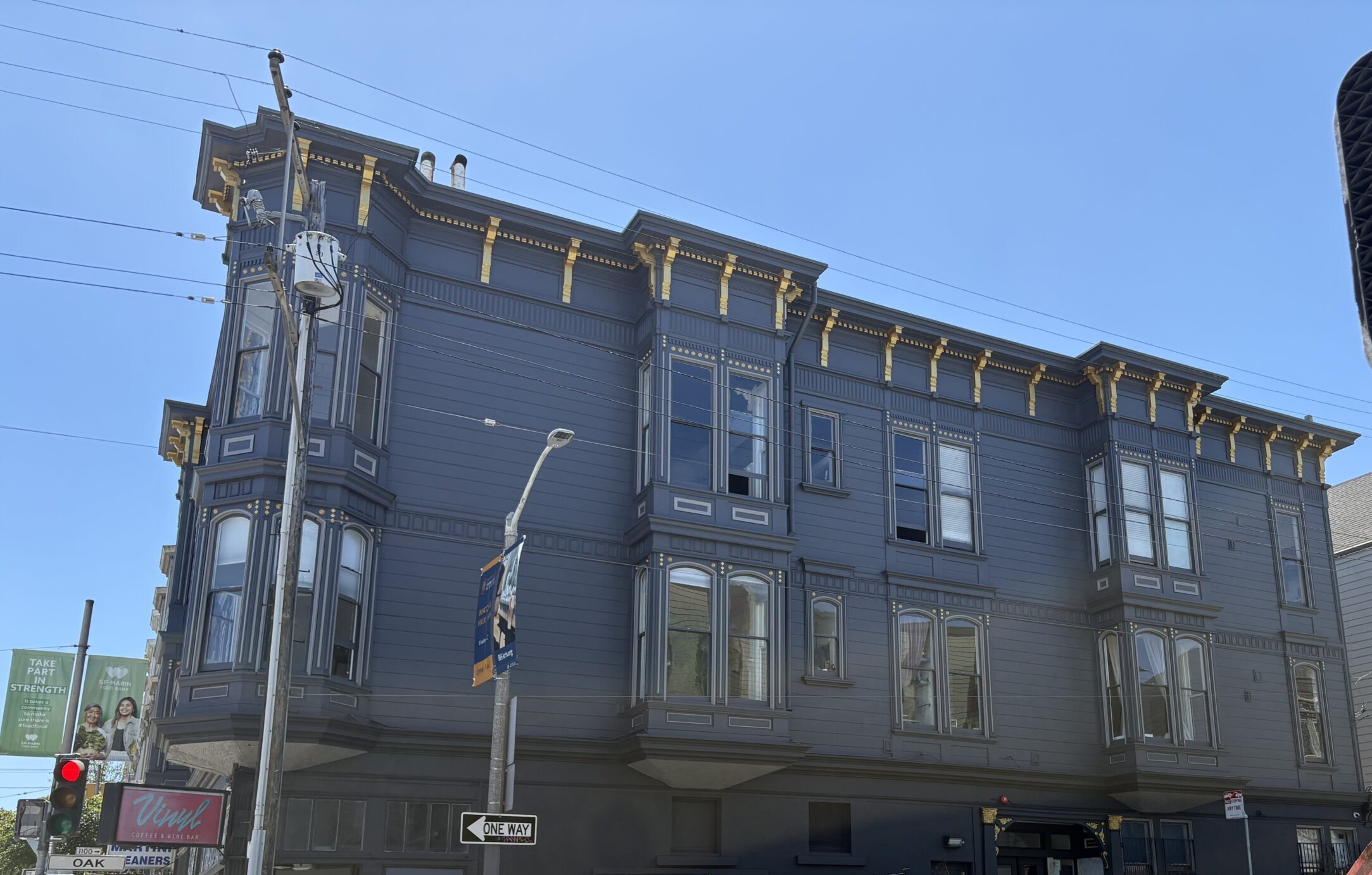
San Francisco’s Victorians are more than pretty facades. They’re 100-plus-year-old wood structures facing a century of fog, salt air, and deferred maintenance. Restoring one properly takes more than a fresh coat of paint. It takes craftsmanship that matches the original builder’s skill.
We recently completed one of these projects on a 115-year-old Victorian in NOPA. Here’s what real Victorian restoration looks like, and why it matters for homeowners across the city.
Why old Victorians need more than paint
Most exterior projects on a historic home start the same way: with paint. But paint only lasts as long as the wood underneath it. On a building this old, that wood has usually been quietly failing for years. Dry rot spreads inside walls, stairwells, and trim long before it shows on the surface.
A homeowner might call for a paint job and learn the real problem is structural. That’s what happened here.
The NOPA project: what we found and repaired
This Victorian needed a full exterior repaint. Once our team got up close, we found extensive dry rot, including in the rear stairwell. Rot in a stairwell isn’t cosmetic. It’s a safety issue that has to be fixed before anything else.
The damage extended further than expected. We ended up rebuilding nearly the entire façade on one side of the building. That included two full bay windows and all of their decorative molding, rebuilt piece by piece to match the home’s original 1910s detailing.
Only after that structural work was complete did we move on to the exterior paint itself, restoring the building’s blue and gold color scheme and bringing back the crisp trim lines that define this architectural style.
What proper Victorian restoration involves
A project like this one draws on several trades working together:
- Dry rot assessment and repair — finding rot hidden behind trim, siding, and stairwells, then removing and replacing it with sound wood
- Structural carpentry — rebuilding bay windows, cornices, and framing to match original dimensions
- Custom millwork — recreating decorative molding profiles that are no longer sold off the shelf
- Historically accurate painting — multiple colors applied precisely to highlight architectural details, not just a single flat coat
Organizations like San Francisco Heritage have spent decades documenting and protecting the city’s Victorian housing stock. Their work is a good reminder of just how much craftsmanship went into these buildings the first time around, and how much care it takes to bring that back.
Signs your Victorian may need restoration
You don’t need a full facade rebuild to know something’s wrong. Common warning signs include:
- Soft or spongy wood around window trim, stairs, or bay windows
- Paint that bubbles, peels, or cracks in the same spots year after year
- Visible sagging in bay window bottoms or cornices
- A musty smell near exterior walls, especially after rain
Catching these issues early usually means a smaller, less expensive repair. Waiting means a project like the one in NOPA.
Own a Victorian or historic home in San Francisco?
Get an assessment before small problems become structural ones.