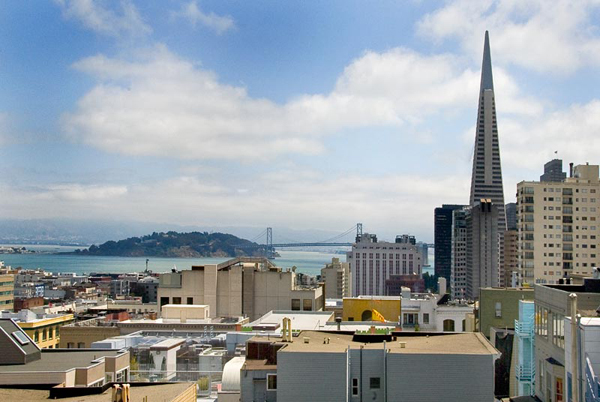
Ask anyone who has lived in San Francisco long enough and they’ll tell you: summer here doesn’t look like summer anywhere else. While the rest of California bakes, San Francisco retreats under a dense marine layer that rolls in off the Pacific, sometimes by noon, and doesn’t always burn off until late afternoon — if it burns off at all. Karl the Fog, as locals have taken to calling it, is charming in a postcard kind of way. For building exteriors, it’s a constant source of stress.
June through September is peak fog season in San Francisco. During this window, exterior surfaces on your apartment building face daily cycles of moisture saturation and drying. That pattern — wet, dry, wet, dry — is hard on paint, wood, caulking, and metal. Property owners who understand what’s happening and prepare accordingly protect their buildings from accelerated deterioration. Those who don’t tend to find themselves addressing expensive damage that was entirely preventable.
Here’s what fog season actually does to building exteriors, and what you should be doing now to prepare.
What the Marine Layer Actually Does to Your Building
The marine layer isn’t rain, but it’s not dry air either. It’s moisture-laden air that condenses on cool surfaces — and San Francisco building exteriors, shaded from direct sun for much of the day, are ideal condensation targets. Over the course of a foggy summer, exterior surfaces can accumulate significant moisture exposure even without a single rainstorm.
The consequences show up in predictable ways:
- Paint that is already failing or thin will absorb moisture and begin to blister, peel, or develop mildew
- Wood that isn’t properly sealed will swell with moisture absorption and shrink as it dries, opening gaps in joints and eventually leading to checking and cracking
- Caulking that has hardened or cracked allows moisture to wick directly into wall assemblies, where it can cause damage that isn’t visible until it’s significant
- Metal components — railings, flashing, fasteners — are subject to accelerated corrosion in persistently damp conditions
- Mildew and algae growth on north- and west-facing surfaces that receive little direct sun and stay damp longest
West-facing and north-facing elevations are consistently the most vulnerable on San Francisco buildings, as they receive the most fog exposure and the least sun to dry them out. If your building has a problem elevation, this is where to focus your prep attention.
Paint Condition: The Most Important Thing to Address Before Fog Season
Paint is your building’s primary moisture barrier. When it’s in good condition, it keeps moisture out of the wood and substrate beneath. When it’s failing — blistering, cracking, peeling, or simply thin from years of weathering — it stops functioning as a barrier and starts functioning as a sponge.
Going into fog season with compromised paint on exterior wood siding, trim, or fascia boards is one of the fastest ways to turn a painting problem into a wood replacement problem. Moisture that gets behind failing paint and into bare or degraded wood will cause rot, and rot spreads.
Before fog season arrives in earnest, walk your building’s exterior and assess the paint condition on each elevation. Look specifically for:
- Blistering or bubbling — moisture is already getting behind the paint film
- Peeling in sections larger than a few square inches — the paint has lost adhesion and won’t protect the substrate
- Cracking or alligatoring — the paint film has become brittle and is no longer flexible enough to handle moisture cycling
- Thin or faded areas where the substrate shows through or the paint lacks depth of color
- Mildew or algae staining, which indicates persistent moisture and needs to be treated before repainting
If your building’s exterior paint is in poor condition, the most practical thing you can do before fog season is get a proper repaint underway. June and early July are still reasonable windows to complete exterior painting in San Francisco — the key is to work during the warmer, drier afternoon hours and choose products rated for application in higher-humidity conditions. Our painting crews are experienced working within San Francisco’s specific weather patterns and know how to sequence exterior work to get quality results even during the marine layer months.
Caulking and Sealants: The Unsung Heroes of Moisture Protection
Caulk does unglamorous but critical work. It fills the gaps between dissimilar materials — where wood trim meets stucco siding, where window frames meet exterior walls, where different building components join — and those gaps are exactly where water finds its way in.
Exterior caulking has a lifespan. Even quality sealants, properly applied, typically last five to ten years before they begin to harden, crack, and separate from the surfaces they’re bonded to. San Francisco’s climate accelerates that process: the constant moisture cycling causes caulk to expand and contract repeatedly, and UV exposure from afternoon sun degrades the material over time.
Before fog season, inspect all caulked joints on your building’s exterior, paying particular attention to:
- Window and door perimeters, where gaps between the frame and wall assembly are most consequential
- Horizontal surfaces and ledges where water can pool and sit against a joint
- Joints between different siding or cladding materials
- Around any penetrations through the exterior wall — pipes, conduit, vents, meter boxes
- At the base of siding where it approaches a horizontal surface like a deck or landing
Failed caulk can often be addressed quickly and at relatively low cost — but the damage it allows if left unaddressed is neither quick nor low cost. Recaulking exterior joints before fog season is one of the highest-return maintenance investments a San Francisco property owner can make.
Gutters, Downspouts, and Surface Drainage
Fog doesn’t just condense on vertical surfaces — it drips. Gutters on San Francisco buildings accumulate moisture through condensation as well as from the light rain events that still occur into late spring. Going into summer with gutters that are partially blocked, sagging, or disconnected at joints means that any moisture that does come off the roof isn’t being directed away from your building the way it should be.
Check that gutters are clear of debris and flowing properly. Look for sagging sections that hold standing water — standing water in gutters causes rust in metal gutters and rot in wood fascia beneath. Make sure downspouts are securely connected at every joint and that they’re directing water away from the building’s foundation rather than against it.
Surface drainage around the building’s perimeter matters too. If soil or paving directs water toward the foundation rather than away from it, every moisture event — including fog condensation dripping from eaves — adds to the moisture load on your foundation and basement-level walls.
Wood Structures: Decks, Staircases, and Railings
Exterior wood structures on San Francisco buildings are particularly vulnerable during fog season. Deck surfaces, stair treads, and wood railings that have lost their sealant or finish become absorbent — and absorbent wood exposed to daily moisture cycling deteriorates rapidly.
If your building’s deck or staircase surfaces were last sealed or painted more than two to three years ago, fog season is a good prompt to assess their condition. Look for:
- Graying and surface checking in unfinished or thinly finished wood — UV and moisture are breaking down the surface fibers
- Soft spots underfoot that indicate moisture has penetrated to the point of beginning structural degradation
- Gaps between deck boards that have opened as wood has dried and shrunk — these allow moisture to pool on framing below
- Rust staining around fasteners, which indicates the fasteners themselves may be corroding and losing their holding strength
Sealing or repainting wood deck and stair surfaces before the heavy fog months is straightforward preventive maintenance. Allowing those surfaces to go into another season without protection accelerates the timeline toward more significant structural repairs — which brings both higher costs and, on staircase structures, compliance implications under California’s SB 721 and San Francisco’s Section 604 requirements.
Ventilation: The Interior Side of the Moisture Equation
Fog season prep isn’t only about the outside of your building. Interior moisture management matters too — especially in San Francisco, where older buildings often have limited mechanical ventilation and tenant behavior (cooking, showering, drying laundry indoors) generates significant moisture that has to go somewhere.
Moisture that can’t escape through ventilation migrates into wall assemblies, where it contributes to the same problems as exterior moisture infiltration: paint failure, mold growth, and eventually structural degradation. Before fog season, check that bathroom and kitchen exhaust fans in your units are functioning and actually venting to the exterior rather than into wall cavities or attic spaces — a surprisingly common issue in older San Francisco buildings.
Attic ventilation is worth checking as well. Proper attic airflow prevents moisture from building up in the roof assembly during the months when exterior surfaces are cycling through daily wetting and drying.
A Note on Timing: Why Earlier Is Better
May and early June are the ideal window for fog season prep work on San Francisco buildings. The rainy season is behind you, temperatures are mild but not yet dominated by the marine layer, and exterior work can be completed with the best possible drying conditions.
By the time heavy fog season arrives in July and August, scheduling exterior painting or caulking work becomes harder — both because contractor schedules are full and because working conditions are less favorable. Getting ahead of the season by a few weeks means your building goes into its most moisture-intensive months in the best possible condition.
If your spring inspection turned up paint, caulking, or wood issues that haven’t been addressed yet, now is the time to get them on the schedule.
Get a Free Estimate from Maven Maintenance
Maven Maintenance has been working on San Francisco apartment buildings for over 20 years. We understand how the city’s climate affects building exteriors — and we help property owners stay ahead of the maintenance cycle rather than chasing it. Whether you need exterior painting, caulking, wood repair, or a full condition assessment, our licensed crews are available to walk your property and put together a realistic scope and bid.